Most mornings in our community start the same way. A mama mboga is up before dawn, arranging her vegetables. A salon owner is setting out her tools, half-worried about the day’s footfall. A boda boda rider is already on the road.
All of them are working hard. And nearly all of them are thinking the same thing: how do I get more customers? How do I actually grow?
Businesses elsewhere are using technology, online marketing, and automation tools to get ahead. Many small business people here know that, and feel it. Not because they lack the ability or the effort, but because no one has shown them how.
The Gap No One Talks About
There’s a common assumption in many of our communities: “AI ni ya watu wakubwa… si yetu.” (AI is for ‘big people’, not for us.)
Most business people already have smartphones. They’re on WhatsApp every day. They scroll Facebook. The devices aren’t the problem. But when it comes to using those same phones to actually grow their business, there’s a gap. They don’t know where to start, they assume the tools cost money, or they figure you need to be some kind of tech expert to get anywhere. So the opportunities just pass.
What Happened at Maono Space
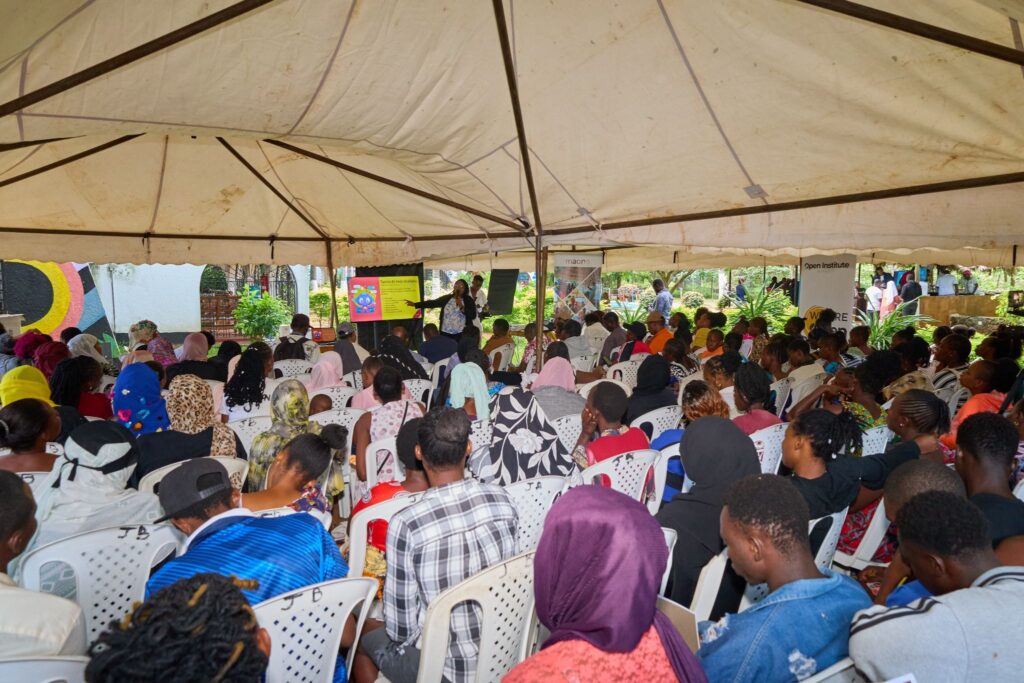
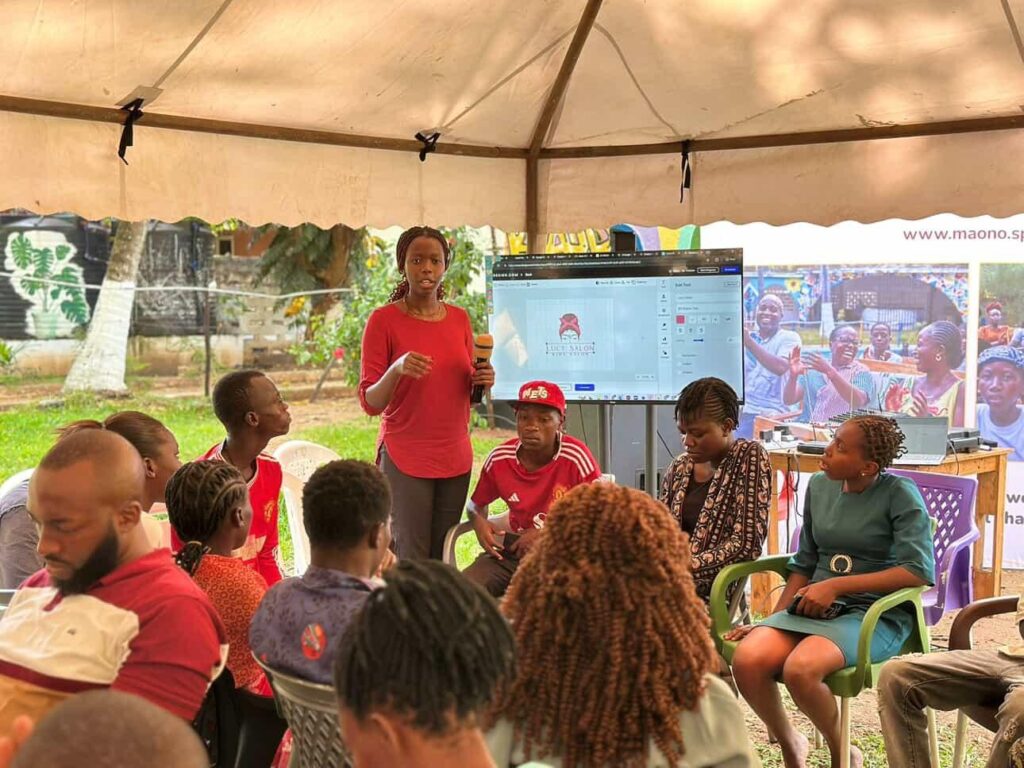
AI Mtaani for Biashara (Business) wasn’t designed in a boardroom. It was built for the real hustlers in this community. We saw that clearly the day over 129 business people showed up at Maono Space.
Salon owners, food vendors, mtumba sellers, boda boda riders, farmers. Some came with their products still in hand. A few couldn’t even fully close their shops. They showed up anyway, because they’d heard there was something worth learning.
At the start of the session, most participants had never really engaged with AI before. They had heard the word, maybe, but it felt distant and complicated. The first question that kept coming up was simply: “Tunaanzia wapi?” (Where do we even start?)
Making It Make Sense
Instead of a long technical explanation, the session opened with something straightforward: AI ni mifumo ya kompyuta inayoweza kufanya kazi ambazo kawaida zinahitaji akili ya binadamu. (AI includes computer systems that can do work that normally needs a human brain.)
That was enough to shift the energy in the room. Then came the turning point: participants were shown two images side by side. One normal. One made using AI.
The reaction: laughter, then genuine shock, then excitement: “Eeh! Hii imefanywa aje?” (How was this made?) In that moment, AI stopped being a vague word on the news and became something concrete.
“Inaweza Nisaidia Kwa Biashara Yangu?” (Can it help my business?)
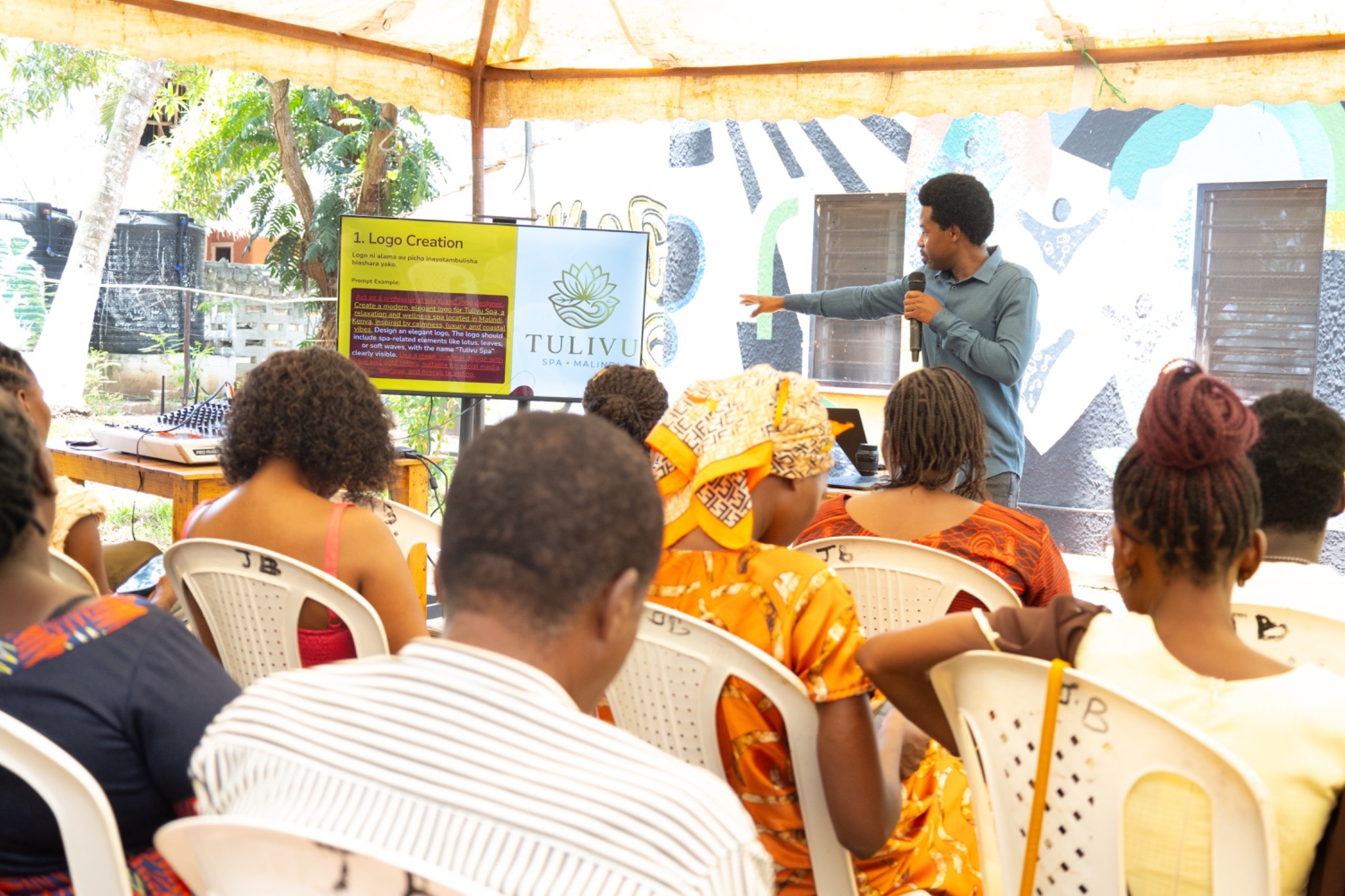
That was when the real learning clicked in. Participants discovered they could use AI tools on the smartphones already in their pockets to write marketing posts for Facebook and WhatsApp, design posters and flyers, create logos, improve how their products look online, and draft simple business plans.
Not in theory. In practice, right there. A salon owner saw how to generate hairstyle design images for clients. A mtumba seller learned how to place clothes on models without needing a photoshoot. A jewellery seller saw how to make products look premium. A food vendor figured out how to put together an attractive promo poster.
For a lot of people in that room, this was the first time it felt real: “Hii inaweza badilisha biashara yangu” (“This could actually change my business”), one of the trainees said.
Learning to Talk to AI
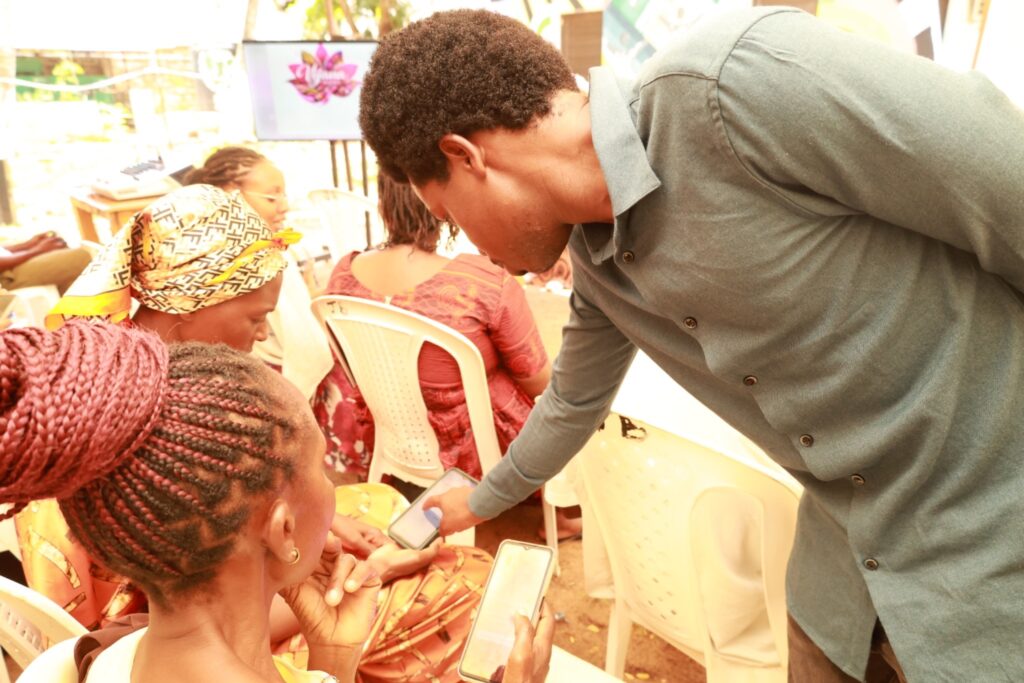
One of the more surprising parts of the session for participants was learning that how you prompt AI really matters. You can get very different results depending on whether you’re vague or specific. So the session spent real time on this: asking clearly, being specific, getting better outputs.
People who’d been watching earlier in the day started trying things themselves. That’s the shift that matters. Not just watching AI do something, but actually directing it.
What Was Happening in That Room
The questions came fast. “Ni app gani natumia? Ni bure? Simu yangu inaweza? Nitaanza aje leo?” (Which app do I use? Is it free? Can it be used on my phone? Where do I begin?) People were helping each other figure things out before we’d even finished explaining. At one point, someone said out loud: “Hii tunaweza tumia leo!” (We can use this today!). They meant it.
The Honest Part
None of this erases the real challenges. Internet access isn’t cheap or reliable for everyone. Not every participant has a high-end smartphone. Some people are still anxious about using new tools, and a single session is not enough to change habits built over years.
But the willingness to learn was undeniable. The problem in this community was never ability. It was access. Access to training that speaks plainly, uses real examples, and respects where people actually are.
What This Is Really About
By the end of the session, AI wasn’t ya watu wakubwa (for ‘big people’) anymore. It was a tool for biashara. Something ordinary people could pick up and use.
Participants asked for more: more sessions, more hands-on practice, ongoing support. One day is a start, not a finish line.
As the trainer, Lucy Amekwi captured the shift in the room:
“The gap between small businesses and big businesses is no longer money or effort. It is access to tools and knowledge. Today, that gap ends with you.”
AI Mtaani for Biashara is about making sure that digital tools reshape how business works for the mama mboga, the salon owner, and the mtumba seller. They’re part of that shift, not watching it happen from the outside.
When you bring useful knowledge to people in their own language, in their own community, and show them what’s actually possible, they don’t just learn. They run with it.
Moving on with our bold ambition
AI Mtaani is built on a bold mission: to make artificial intelligence relevant, practical, and accessible at the community level, ensuring that no one is left behind.
We are working to train 1,000 teachers, equipping them with the knowledge and confidence to introduce AI concepts in schools. By doing so, we aim to inspire over 10,000 students to see beyond traditional career paths like doctor, engineer, or lawyer, and begin to explore emerging opportunities shaped by technology.
At the same time, AI Mtaani aims to train 10,000 young small business owners to integrate AI into their work. This is to help them strengthen their operations, scale their ideas, and reimagine what’s possible for their businesses in a rapidly changing economy.
But this vision cannot be achieved alone. We are actively inviting partners, collaborators, and supporters to join us in making AI truly accessible and meaningful at the grassroots level. Together, we can ensure that communities are not just adapting to AI but actively shaping how it works for them.